When Does My Aircon Actually Need a Chemical Wash? A chemical wash costs between SGD 80 and SGD 150 per unit in Singapore, making it two to three times more expensive than regular servicing. Some contractors try to sell a full chemical overhaul on every routine visit.
We founded Coolbest Aircon Servicing with a mission to deliver reliable, high-quality cooling solutions to communities across Singapore at affordable rates. This guide outlines five objective triggers indicating your unit genuinely requires deep chemical cleaning. You will also learn the specific scenarios where a standard maintenance visit is perfectly sufficient.
Trigger 1: Persistent Musty Smell After A Regular Service
A standard wash will not resolve a musty odour that returns within days of your technician’s visit. Biofilm, a dense layer of microbial growth, often penetrates the evaporator coil much deeper than surface brushing can reach.
We frequently see this issue in Singapore because local humidity typically hovers between 70% and 90%. This high moisture level allows airborne spores to germinate inside the dark, damp coil within 12 to 24 hours.
An alkaline chemical soak dissolves the stubborn biological matter that brushwork alone leaves behind. This targeted chemical process is the classic scenario where a deep wash becomes absolutely necessary.
If you had a regular service four or more months ago and the smell just started, try booking a fresh regular service first.
Recognizing Deep Biofilm Penetration
- You notice odours resembling wet socks or vinegar.
- The smell only appears when the compressor switches on.
- Temporary relief lasts less than a week after basic cleaning.
Trigger 2: Weak Airflow Even With A Clean Filter
If you have washed the filter, waited 24 hours, and the airflow remains weak, a chemical dismantle wash is required. The blower wheel or internal coil is clogged with accumulated grime below the filter level.
Our technicians regularly discover that a standard service cannot fully clear this hardened debris. The blower wheel needs to be completely removed for a thorough dismantle cleaning.
According to recent 2025 data, standard servicing in Singapore costs around SGD 30 to SGD 50, but it only addresses surface-level dust. A clogged blower wheel forces your system to work harder, severely impacting its energy efficiency and driving up your monthly electricity bills.
The 20-Centimetre Airflow Test
You can quickly diagnose a deep blockage using a simple hand test.
We recommend performing this check before calling a professional.
- Turn your aircon to its maximum fan speed.
- Hold your hand exactly 20 centimetres below the unit’s louvres.
- If you feel cool air, the blockage is trapped deep inside the evaporator coil.
- If you feel no air at all, double-check that your filter is completely clear.
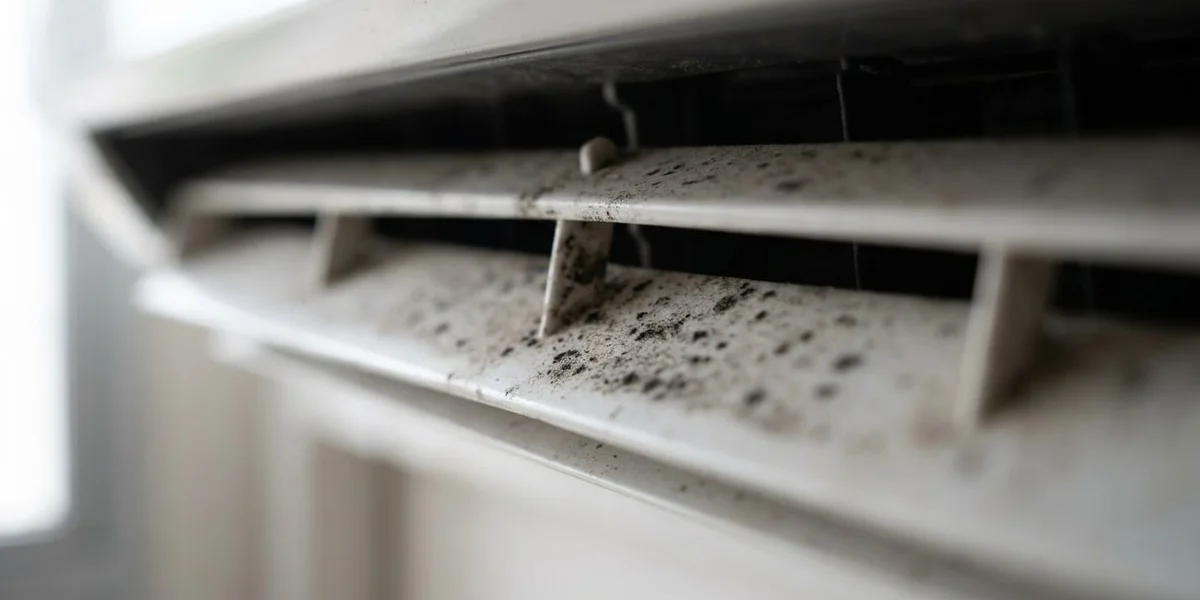
Trigger 3: Visible Mould Or Black Spots On The Louvres
Visible dark streaks or black spots on the horizontal louvres confirm that your aircon requires an immediate chemical wash. This visual evidence means the internal biofilm has grown outward enough to escape the internal chassis.
We treat visible mould as a serious warning sign, because anything you can see with the naked eye is ten times worse on the hidden coil. Singapore’s warm, damp climate makes fungal growth extremely common without regular deep cleaning.
In fact, the Housing & Development Board received 240 complaints in 2025 specifically regarding condensation and mould caused by air-conditioner usage.
Health Risks of Ignoring Spores
Delaying maintenance allows the system to blow harmful spores directly into your living space.
- Mould exposure triggers respiratory issues and allergic reactions.
- Young children, seniors, and immunocompromised individuals face the highest risks.
- Spores spread to furniture, walls, and clothing, creating secondary infestations.
Trigger 4: Water Leaks That Return Within Days Of A Drainage Flush
A water leak dripping from the front cover just days after a drainage flush indicates a blocked internal tray, requiring a chemical wash. The original biofilm is being flushed downstream and is rapidly reblocking the pipe from the tray side.
We use targeted chemical treatments to completely clear the primary drain tray, which a simple vacuum flush cannot reach. Rainy weather in Singapore increases indoor moisture, completely overwhelming a partially clogged drainage system.
High-end brands like Daikin and Mitsubishi feature complex internal channels that trap this excess condensation easily.
Why Basic Flushing Fails
A basic maintenance visit usually only involves suctioning the main PVC pipe.
Our full chemical wash includes a comprehensive clearing of the entire water management system.
- The Drain Pan: Chemical solutions dissolve the jelly-like slime accumulating in the pan.
- The Evaporator Coil: Cleaning the coil prevents new slime from sliding down into the pan.
- The PVC Pipe: A final chemical flush ensures the entire exit route is sanitised.
Trigger 5: Unit Is 3+ Years Old With No Previous Chemical Wash
If your aircon is more than three years old and has never had a chemical wash, you should schedule one immediately. Even without visible symptoms, Singapore’s constant humidity accelerates hidden internal fouling over three years of standard usage.
Our maintenance data shows that switching one of your quarterly basic services to a deep clean at the three-year mark is the highly recommended call. A non-dismantle chemical wash generally costs between SGD 80 and SGD 120, making it a cost-effective preventative measure.
Ignoring this timeline often leads to a full system breakdown, which requires a much more expensive chemical overhaul priced up to SGD 250.
The Long-Term Financial Impact
Investing in a deep clean protects your wallet over the lifespan of the equipment.
- Energy Savings: A clean coil cools the room faster, reducing compressor runtime.
- Part Longevity: Removing corrosive grime prevents the copper pipes from degrading and leaking refrigerant gas.
- Avoided Replacements: Routine chemical cleaning extends the functional life of the unit well beyond the standard five-year warranty.
When A Regular Service Is Enough
If none of the five triggers apply, stick with a regular quarterly servicing priced around SGD 30 to SGD 50 per unit. Most residential and small business systems operate perfectly well on standard maintenance if the environment is kept relatively clean.
We encourage our clients to avoid over-servicing their equipment with harsh chemicals unnecessarily. A standard service includes washing the filters, checking the thermostat, inspecting components, and a basic wipedown of the indoor unit.
Safe Scenarios for Standard Servicing
You only need a basic cleaning session under these specific conditions:
- New Equipment: If the unit is under two years old, always stick to regular service.
- Normal Operation: If you notice no smell, normal airflow, and no leaks, a standard visit is sufficient.
- Recent Maintenance: If your last professional service was completed within the past three months.
- Surface Dust Only: If you see visible dust on the filter but absolutely no dark mould spots.
Upsell Red Flags To Refuse
Always refuse contractors who demand a mandatory chemical wash on a perfectly functioning unit that is under two years old. No residential aircon in Singapore requires two intensive chemical washes per year, even with heavy usage.
We advise our customers to remain highly sceptical of technicians who immediately quote a SGD 400 wash without performing a physical inspection. That behaviour is an aggressive sales tactic, not a legitimate mechanical diagnosis.
Common Scams to Watch Out For
Protect yourself from dishonest practices by verifying every claim your technician makes.
- The Mandatory Lie: A chemical wash is never legally or mechanically required for a brand new unit.
- The Generic Photo: Beware of technicians showing you a photo of a dark coil on a phone screen that does not match your specific model.
- The Blind Quote: Never accept an expensive overhaul quote generated before the front cover is even opened.
Always ask the technician to physically show you the fouling on your actual unit. A legitimate quote always comes with transparent, verifiable photographic evidence.
Frequency Benchmarks
Establishing a proper maintenance schedule prevents sudden breakdowns and keeps your indoor air quality healthy. The frequency of a deep clean depends entirely on the age of your equipment and your daily usage habits.
We use the following industry benchmarks to help Singapore homeowners and business operators plan their annual maintenance budgets. Use this table as a clear reference point before agreeing to any service contract.
| Unit Age | Use Pattern | Chemical Wash Frequency |
|---|---|---|
| 0 to 2 years | Any | Not needed, regular service |
| 3 to 5 years | Moderate use | Every 12 to 18 months |
| 3 to 5 years | Heavy or continuous use | Every 8 to 12 months |
| 5+ years | Any | Every 10 to 12 months |
| 5+ years | Pets, smokers, balcony near dust | Every 6 to 9 months |
Get An Honest Diagnosis
Send a close-up, well-lit photo of your aircon louvres along with a short description of your symptoms to receive an accurate assessment. We will review the visual evidence and tell you exactly whether a regular service or a deep chemical wash is the right solution.
Knowing exactly when does my aircon actually need a chemical wash saves you money and prevents unnecessary strain on your system. This transparent process guarantees you receive a fixed price quote before scheduling the actual booking.
Book a chemical wash only when you actually need one.